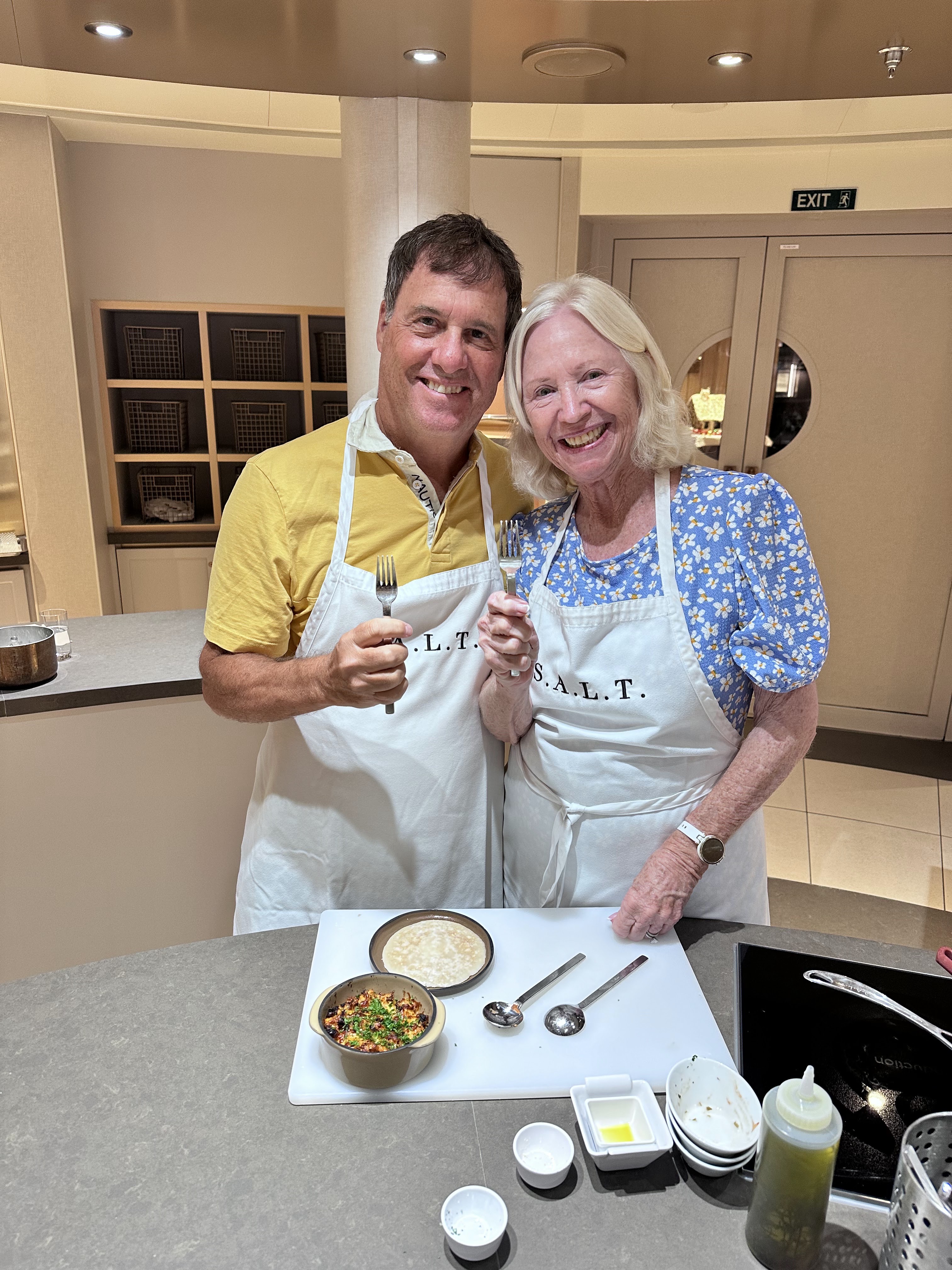

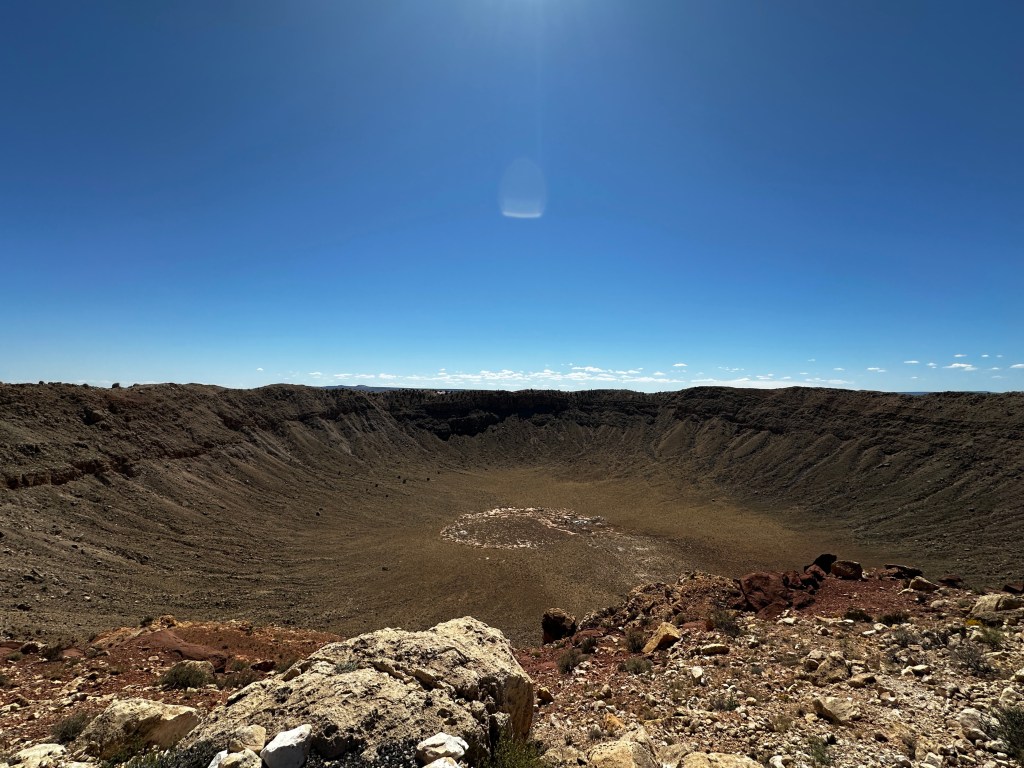
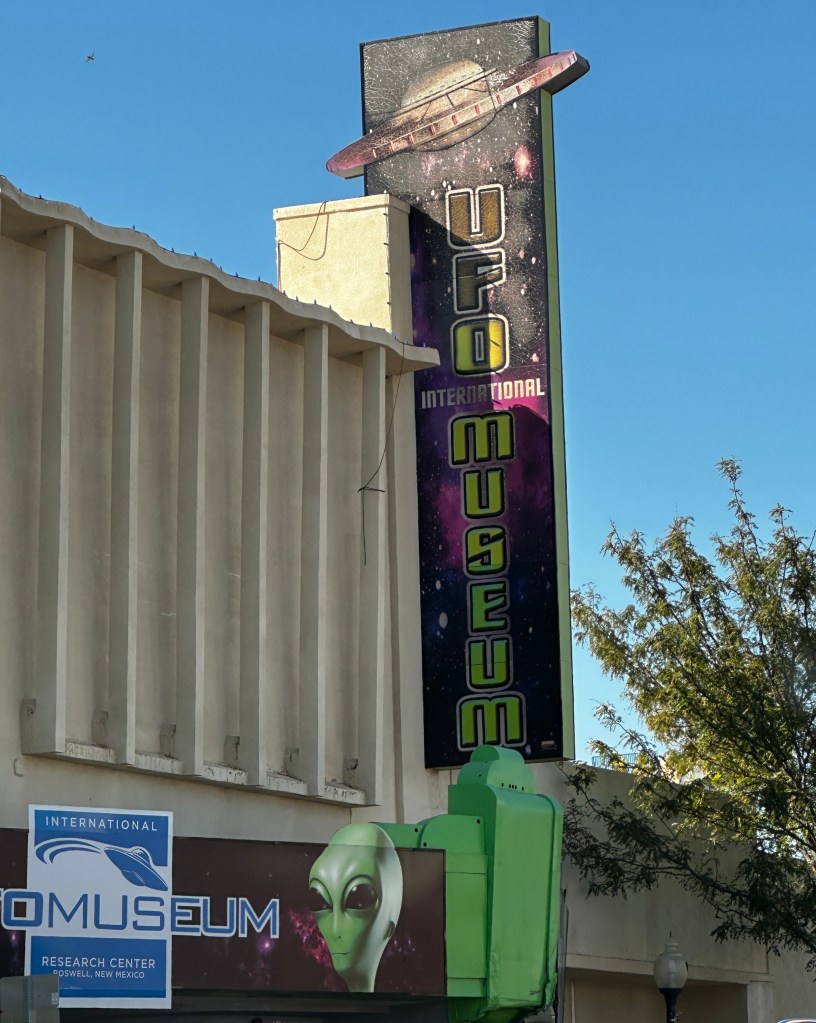
During our travels through New Mexico on an Alien Tour—from the Meteor Crater to Roswell, where even the most ordinary dishes come with a fiery kick—I found myself falling under the spell of Hatch chili peppers.

It seemed fitting that our journey took us straight through Hatch, New Mexico, the undisputed mothership of peppers.
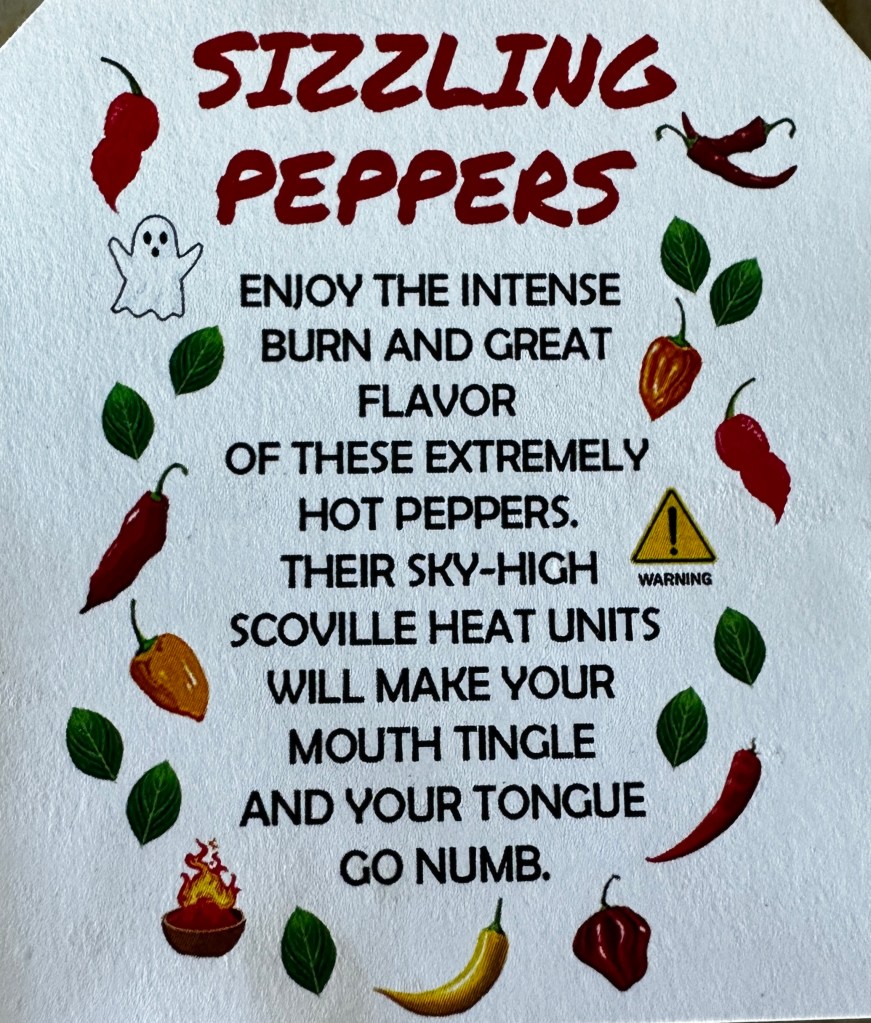
The moment we got home, I went online to feed my new obsession, which led me to the Sandia Seed Company.
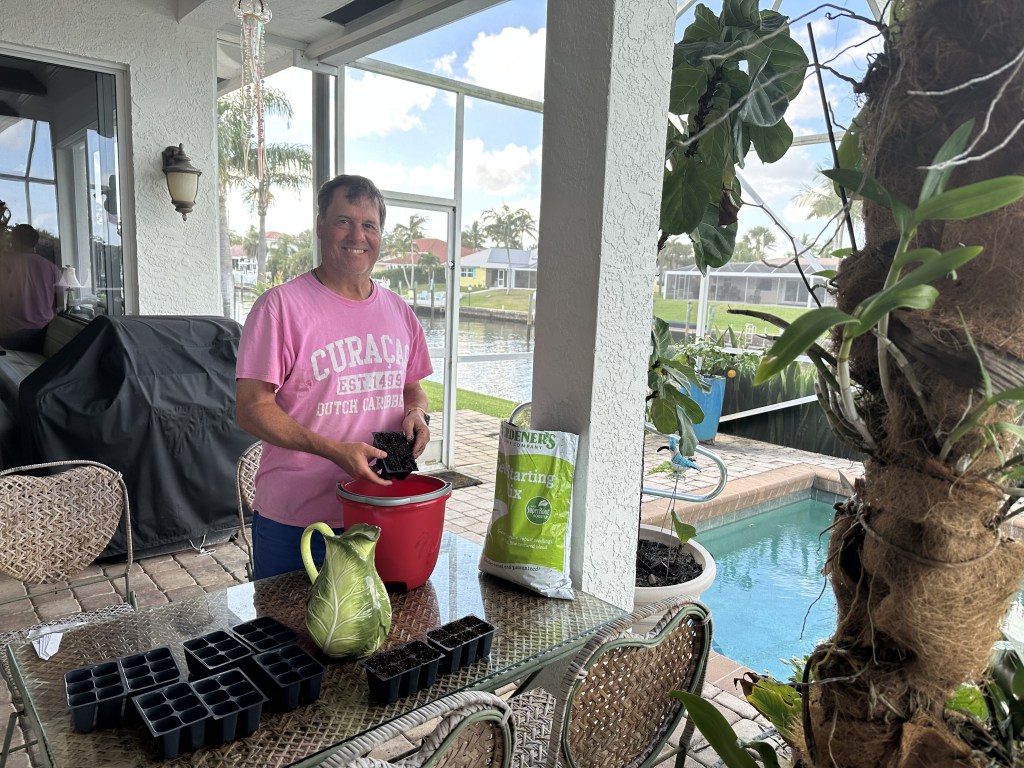
One phone call later, I was deep in conversation with a wonderfully knowledgeable woman who gave me a crash course in pepper cultivation.

By the time we hung up, I had ordered ten different varieties, covering the Scoville Scale from a mild 2,000 (Big Jim Chile) to a blistering 1,569,000 Carolina Reaper). My pepper-growing adventure has begun.
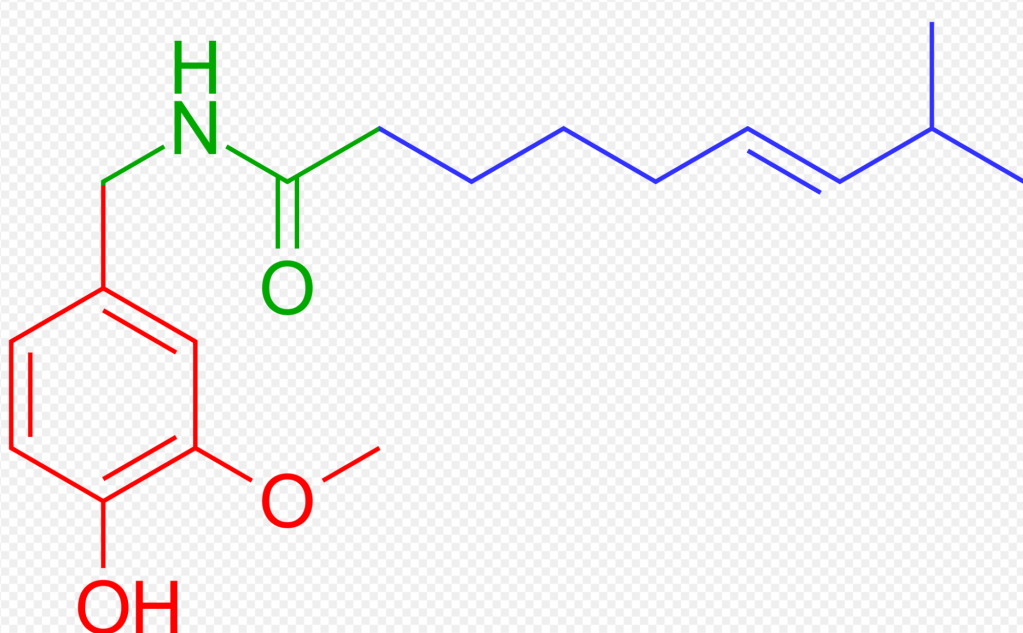
In the Scoville organoleptic test, an exact weight of dried pepper is dissolved in alcohol to extract the heat components (capsaicinoids), then diluted in a solution of sugar water.
[3][7][8] Decreasing concentrations of the extracted capsaicinoids are given to a panel of five trained tasters, until a majority (at least three) can no longer detect the heat in a dilution.[1][3][7][8] The heat level is based on this dilution, rated in multiples of 100 SHU.[7] (Wiki)
So why do we love capsacin? Behind the agonising pleasure of capsaicin
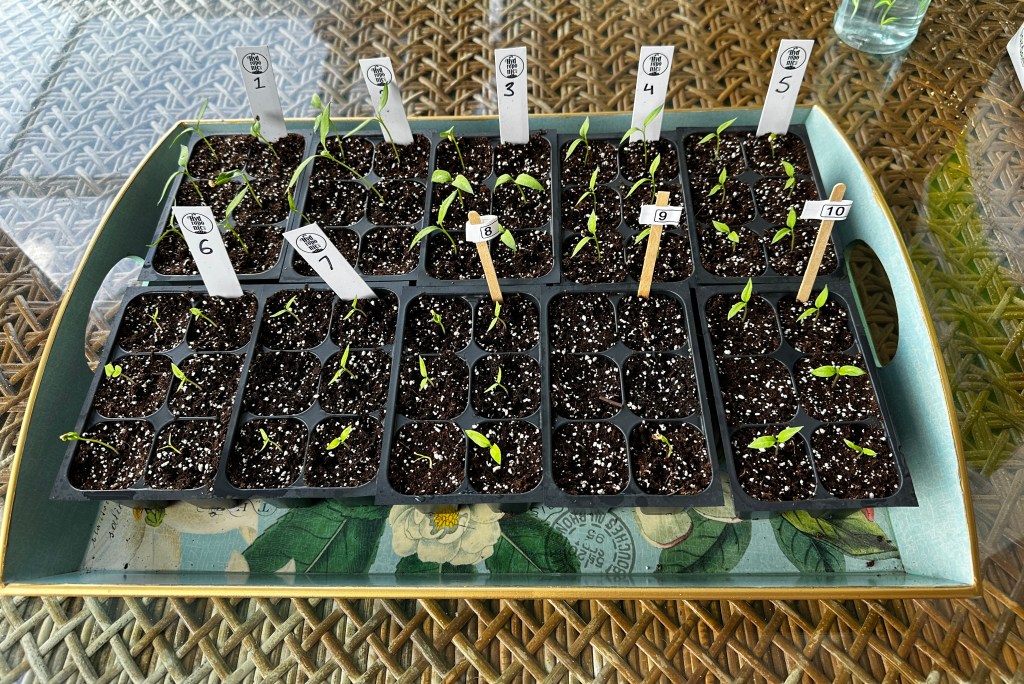
With ten trays, six of the same pepper plants in each tray each, 10 trays for 10 different peppers, the wait now begins. Exciting. I use a spray bottle of filtered water every day, spritzing with a light mist, making sure not to soak the soil. I have been keeping my tray of seeds indoors in a North East facing window. Our weater in Florida has been unusually cold this year, where temperatures have been dropping down into the low 60’s/Upper 50s at night.
I can’t wait to see these grow and my first harvest so I can make my almost famous Hot Sauce: And wait until you see the name I have picked out for this batch (Alien themes) to fit my Science Fiction writing.
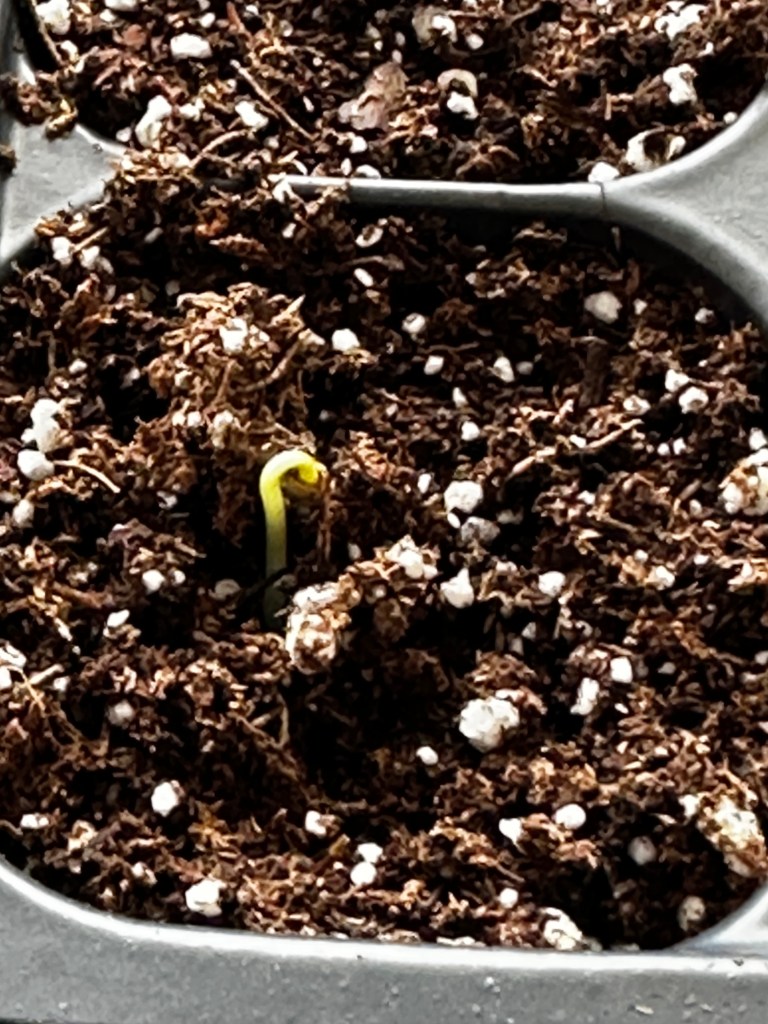
Order of seeds sprouting (planted on 2/15/2025)
- Chimayó (2/23/2025 – 8 days)
- Devil’s Tongue (2/25/2025 – 10 days)
- Hatch Green Medium / Big Jim’s (2/25/2025 – 10 days)
- Carolina Reaper (2/25/2025 – 10 Days)
- Yellow Jamaican Hot (2/26/2025 – 11 Days)
- Habanero Red (2/26/2025 – 11 Days)
- Hatch Green X Hot (2/27/2025 – 11 Days)
- Bhut Jolokia Red Ghost (2/27/2025 – 11 Days)
- Tombstone Ghost (2/27/2025 – 11 Days
- Trinidad Scorpion (2/28/2025 – 12 Days)

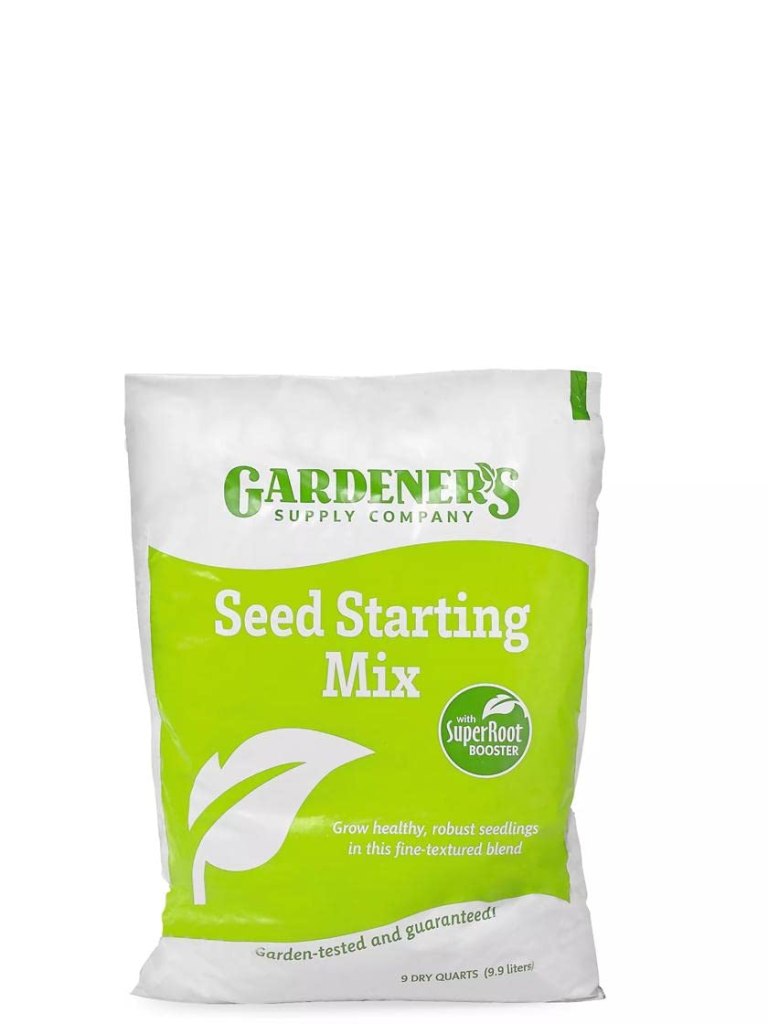
What I used to get started:
I selected these seed trays from Amazon. They were inexpensive and worked perfectly. I only wish they provided more than 7 plant stakes.
As for starter Mix, I selected Gardeners Supply Company, which I from Amazon as well. I was very happy with the results.
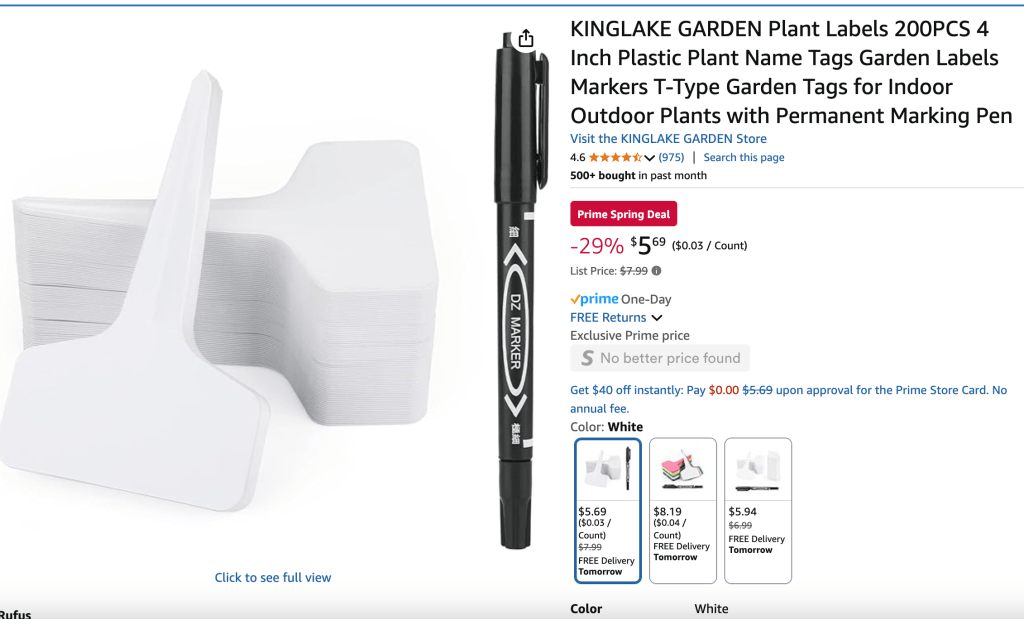
I had to buy extra plant identification markers and found these on Amazon to work very well at a great price (includes writing marker). I thought plastic (although not good for sustainable for the environment would be better than the metal ones that I know would rust away.
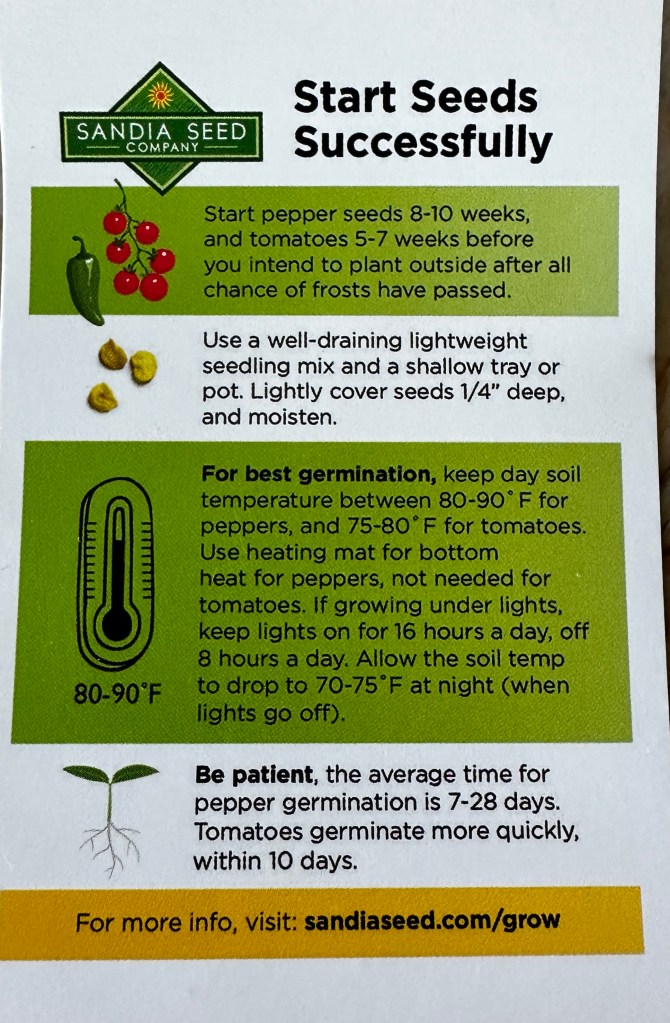
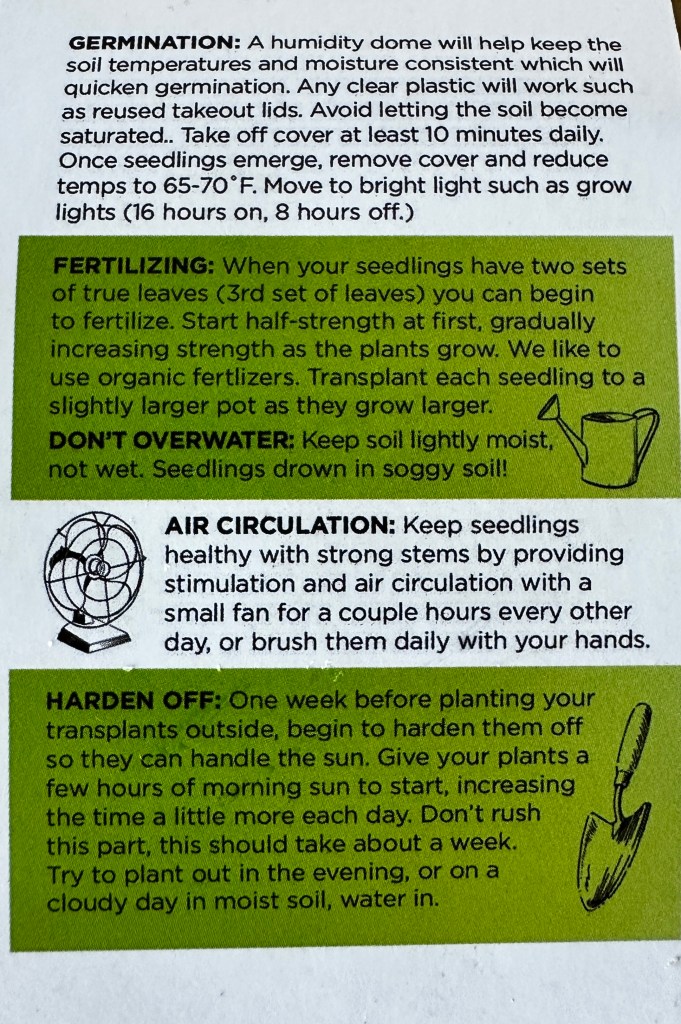
What I love about Sandia Seed Company is their education on exactly how to grow and care for the plants. I have talked to a representative over the phone about some detail of growing from seed–– something new to me–– but when you order the seeds there are little instruction tags that come along with them. You can always go to their website and explore under the [Learn] tab for more instructions.
After 18 days, the germination percentage is 88.33%, which I think is pretty great. Between the quality of the Sandia Seed company, the starter soil, my loving care and Florida weather, we will see if the 7 empty plots are just late bloomers or sterile seeds.
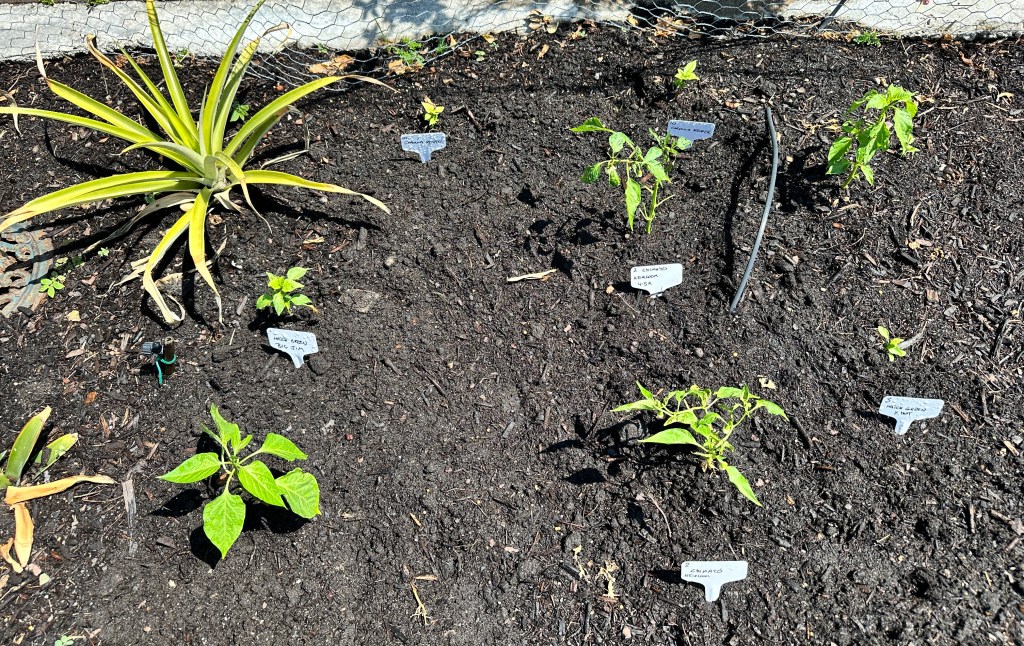
It’s moving day (3/31/2025). These were planted from seed on 2/15/2025. I planted the most fit plants in groups of three for the faster growing and groups of two for the slower growing. As an observation, the lower te Scoville number, that faster to maturity as well as seed growth percentage. The higher the Scoville number, the longer to maturity and the lower percentage seed growth. But he best outcomes in life are always the hardest to achieve and I am sure the wait will be well worth the effort.
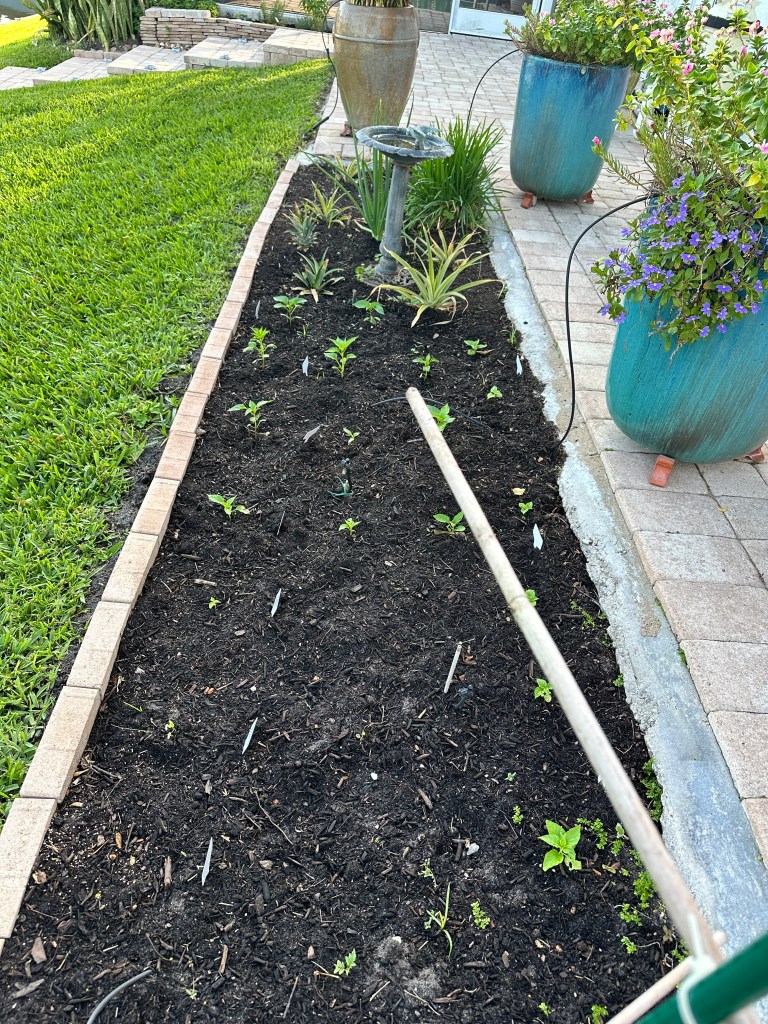

After transplanting the shoots into the garden, I lost approximately seven sprouts, which I think was from the intense sun and not enough watering. I had to adjust my irrigation schedule to a daily, 4:00 PM (five minute watering) to keep the ground cool and moist. Some of the leaves looked like they were sunburn because I was watering earlier in the day, but moving the watering schedule to 4:00PM seems to have corrected these issues. The Red Habanero sprouts seemed to be the most vulnerable and the higher the capsaicin rating, the more slowly and vulnerable the sprouts seem. I need to wait until the sprouts have at leave four sets of leaves before transplanting to the garden.
BREAKING NEWS: (4/21/2025)
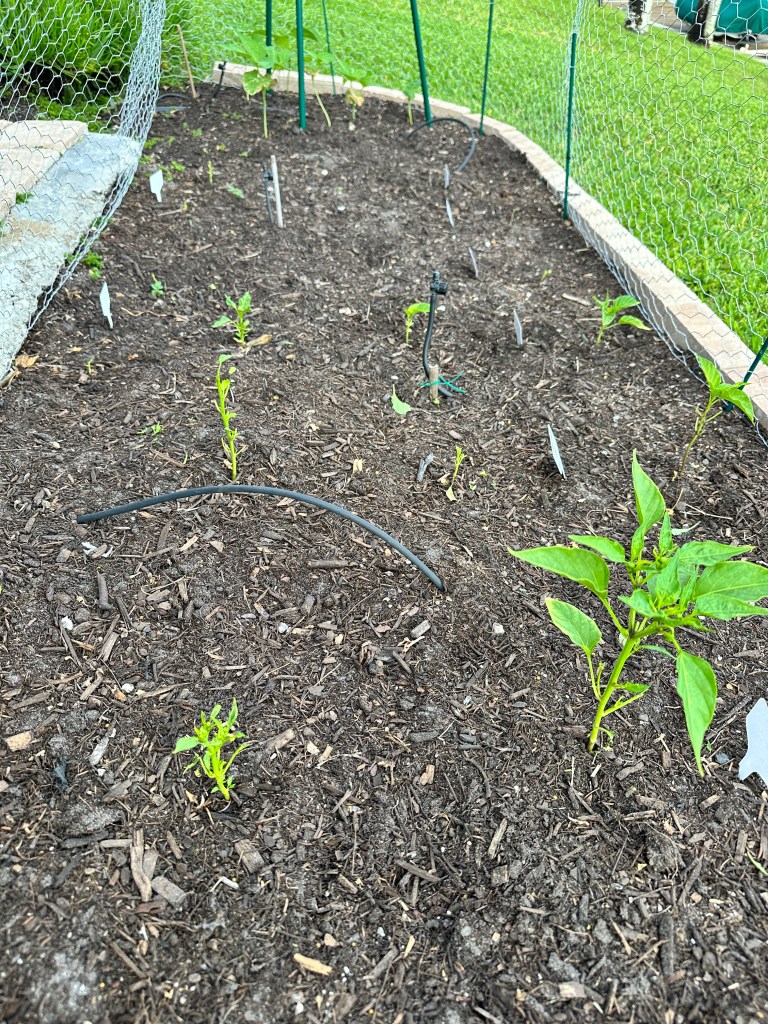
Over the past five days I had noticed some of my new shoots missing? I suspected rabbits, which we have seen, and is new recently, in this area near the water. I took three rubber snakes (so realistic looking) from our lemon tree to ward off the crows (effective) and placed them in the garden, The next day, more shoots were gone! I had placed one of the snakes right up against the new shoots! What was I dealing with here?
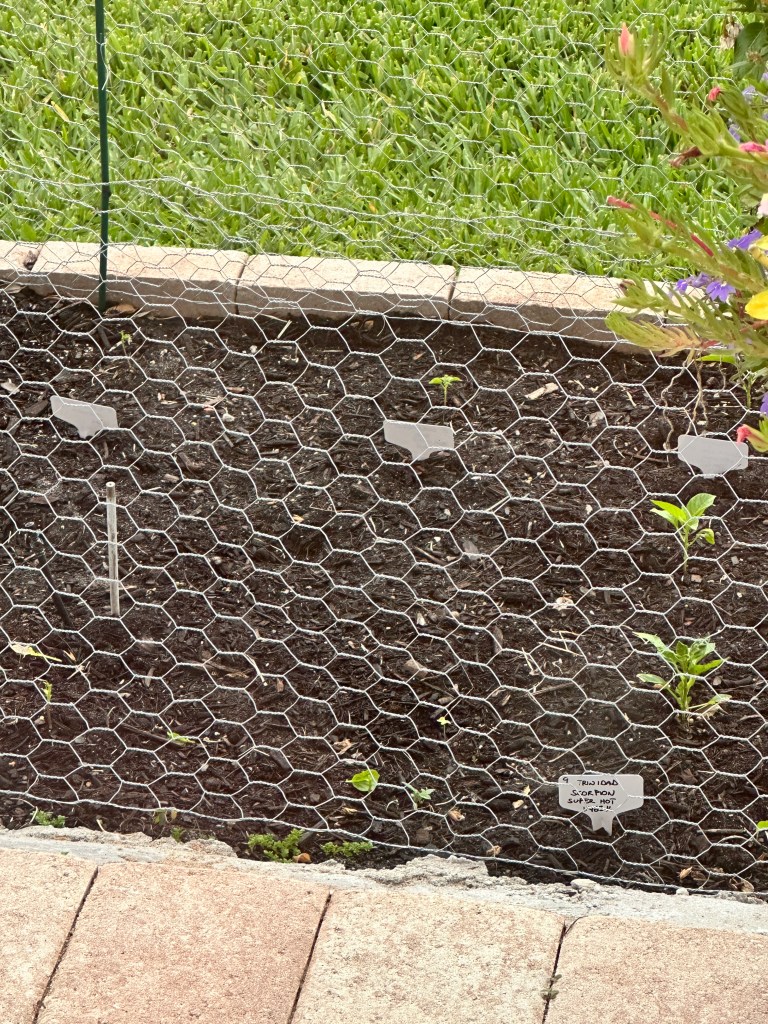
So I bought some chicken wire and surrounded both beds, thinking this is the answer. The next day more shoots were gone. Were rabbits jumping up over the fence? They had to be? Whatever were eating these new, lovingly cared for shoots, were devouring these during the nighttime.
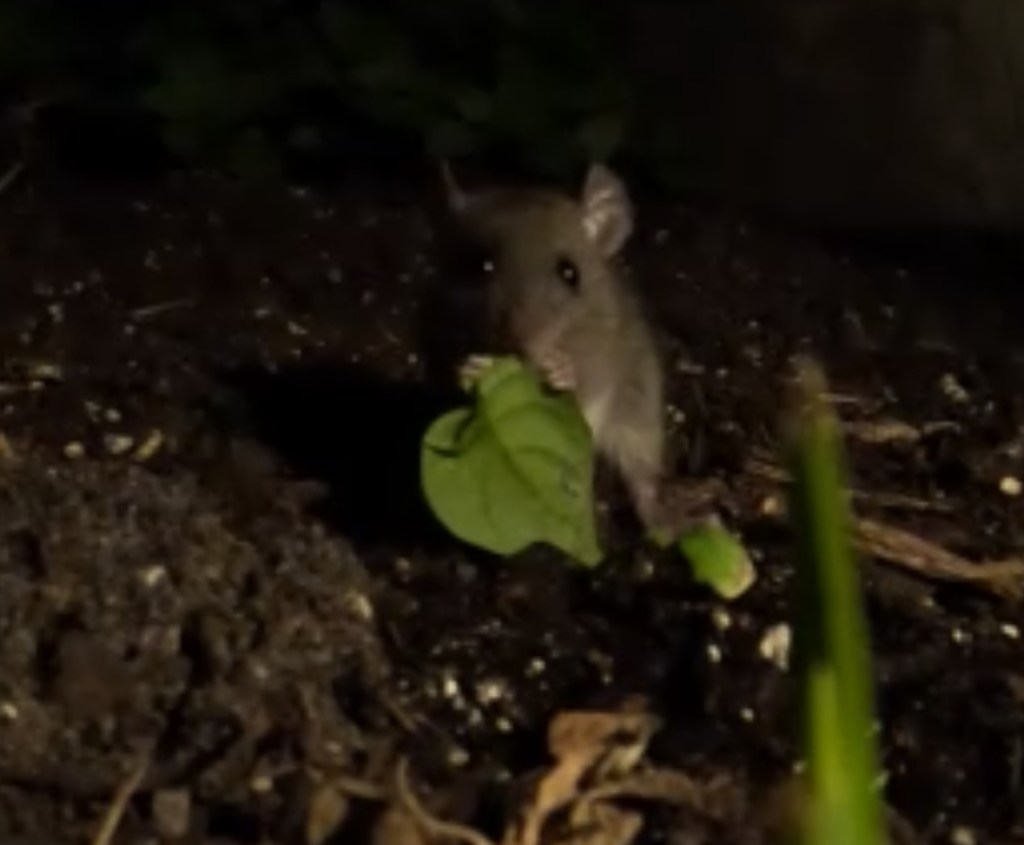
It was time to bring tech into the game, so I set up my GoPro and solar table light for the next night, placing it in timer mode, taking an image every 30 seconds. Bingo. I found the culprit––a juvenile roof rat (Rattus rattus), which apparently love new, tender shoots.
BREAKING NEWS (4/24/2025): This is now becoming an episode of Wile E. Coyote vs the Road Runner. Let the games begin! One week later, having caught some of the Rattus rattus, I have lost the battle… but not the war. I transplanted two remaining plants (Hatch Green Medium / Big Jim’s & Chimayó) into pots and placed them out of reach. I have some seedlings still in reserve and in my lanai until they grow a little larger and I will transplant those as well into pots for safe keeping.
UPDATE: 5/6/2025: I think I have Rattus rattus under control, finding themselves reclassified as Removous removous. With some plants having been in reserve and more growing from seed, I moved them back out to the garden.

 No Stacking!
Leave a comment